By Olympic Equipment
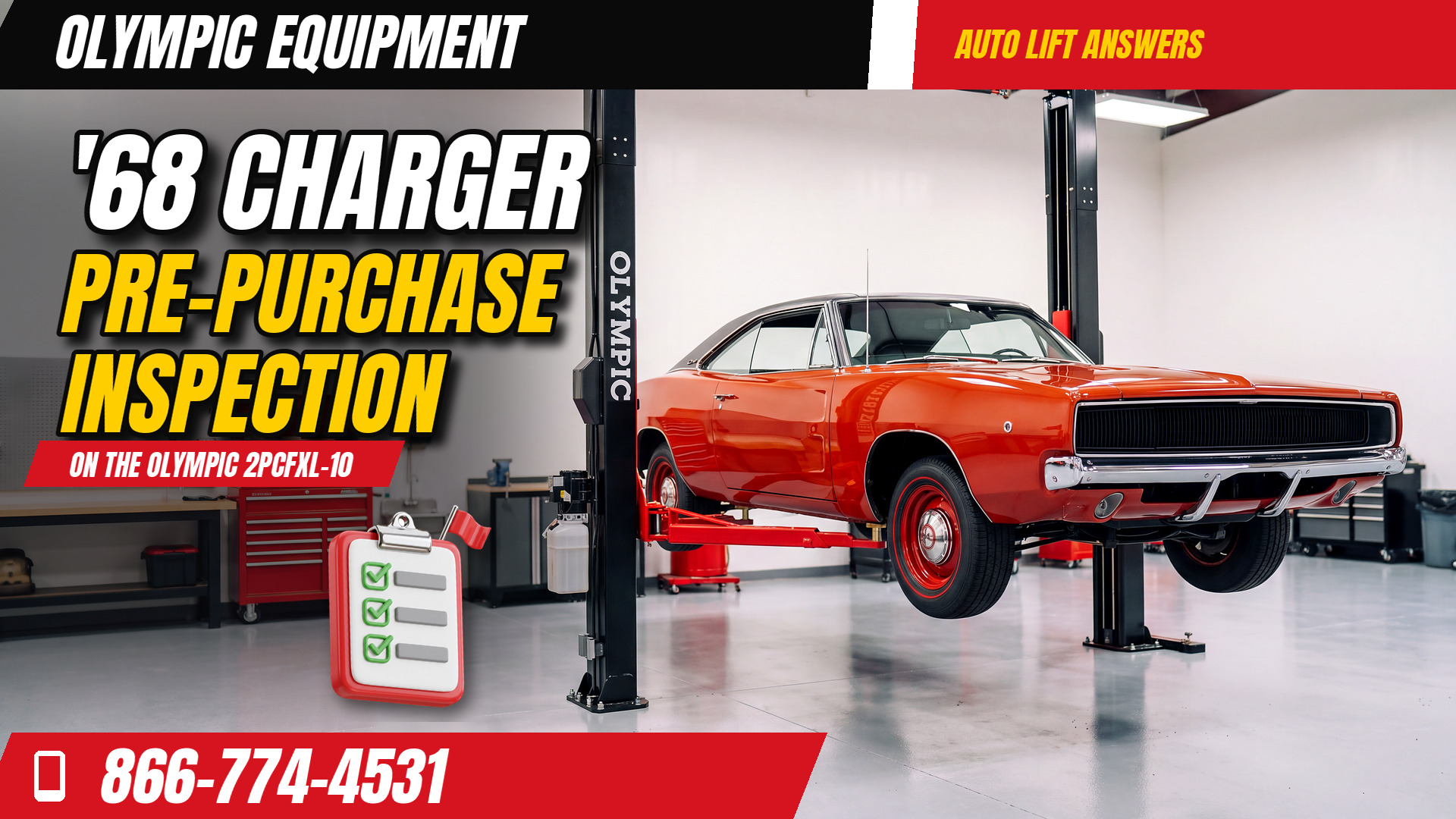
Buying a 1968 Charger? Before money changes hands, get it in the air. Photos show the paint; a pre-purchase inspection on a two-post lift shows you the underside, which is where the expensive surprises live. Here’s a simple red-flag/green-flag scorecard to take with you, plus a few facts about why the ’68 is such a sought-after car.
Before you start
- Put the lift arms on the lifting points listed in the vehicle’s service manual.
- Raise the car a few inches and check that it’s stable on all four pads.
- Raise it to working height and set it on the locks before anyone goes underneath.
The underside scorecard
| Area | 🟩 Green flag | 🟥 Red flag |
|---|---|---|
| Frame rails & torque boxes | Straight, solid metal | Rot, kinks, or fresh undercoating hiding repairs |
| Floor pans & trunk pan | Original, intact metal | Pop rivets, patch panels, or rust-through |
| Leaks | Dry, or a light film on an old engine | Active drips from the engine, transmission, or rear axle |
| Suspension & steering | Tight joints, intact bushings | Torn boots, cracked bushings, or play |
| Brake & fuel lines | Secured in their clips | Heavy corrosion or crimped lines |
| Exhaust | Sealed and properly hung | Patched pipes, missing hangers |
Did you know? Four 1968 Charger facts
| Fact | Source | |
|---|---|---|
| 💡 | The 1968 Charger was an all-new second-generation design: “Coke-bottle” flanks, hidden headlights behind a full-width grille, and a tunneled rear window between “flying buttress” sail panels. | Stellantis Media, Hemmings |
| 💡 | The Charger R/T was new for 1968. It came standard with the 375-hp 440 Magnum V8, and the only engine option was the 426 Hemi, rated at 425 hp. | Hemmings, Hagerty |
| 💡 | Dodge built more than 96,000 Chargers for 1968 (more than 17,000 of them R/Ts), up from about 15,000 for 1967. | Hemmings |
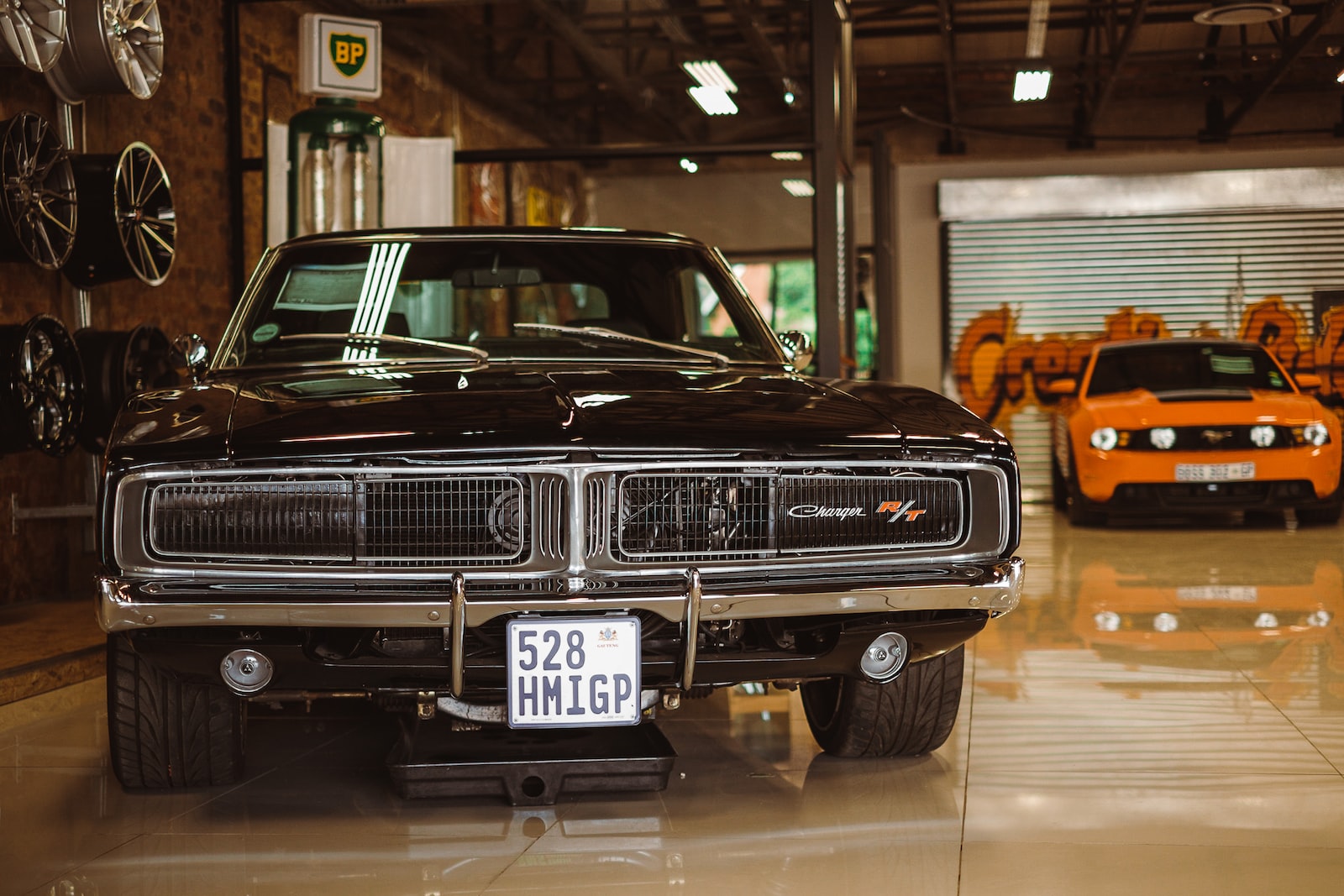
| 💡 | In 1968 a black Charger R/T chased Steve McQueen’s Mustang GT through San Francisco in Bullitt. | Hemmings, Stellantis Media |
If you find red flags
Take photos of everything, front to back, so you can compare cars and show them to someone else later. One red flag doesn’t automatically kill a deal, but it does change the conversation: bring in a specialist who knows these cars before you decide.
The scorecard is a buyer’s first look, not a professional inspection. When in doubt, get a second opinion from someone who knows 1968 Chargers.
Olympic 2PCFXL-10 specs
- 10,000 lb lifting capacity, 2-post clear floor lift
- Three-stage symmetrical arms; front and rear arm reach 29.52–59.05″
- Maximum lift height 70.87″, minimum 3.94″
- 153″ overall height, 135.31″ overall width, 100.39″ drive-through width, 114.17″ between posts
- Minimum ceiling height 12 ft 9 in
- 15 locking positions, single-point lock release, three-stage screw-on adjustable foot adapters
- 110V power unit included, 220V option; four 3.5″ truck adapters included
- Certified and tested at 150% of rated capacity · 10-year warranty
Specs from the Olympic 2PCFXL-10 product page on olympic-equipment.com, checked Nov 24, 2026. General information only; always follow your vehicle’s service manual and the lift’s operating instructions.
Links
Olympic Equipment: olympic-equipment.com · YouTube: @OlympicEquipmentAutoLifts · More classic-car features at Motorcar Magazine · Call 866-774-4531