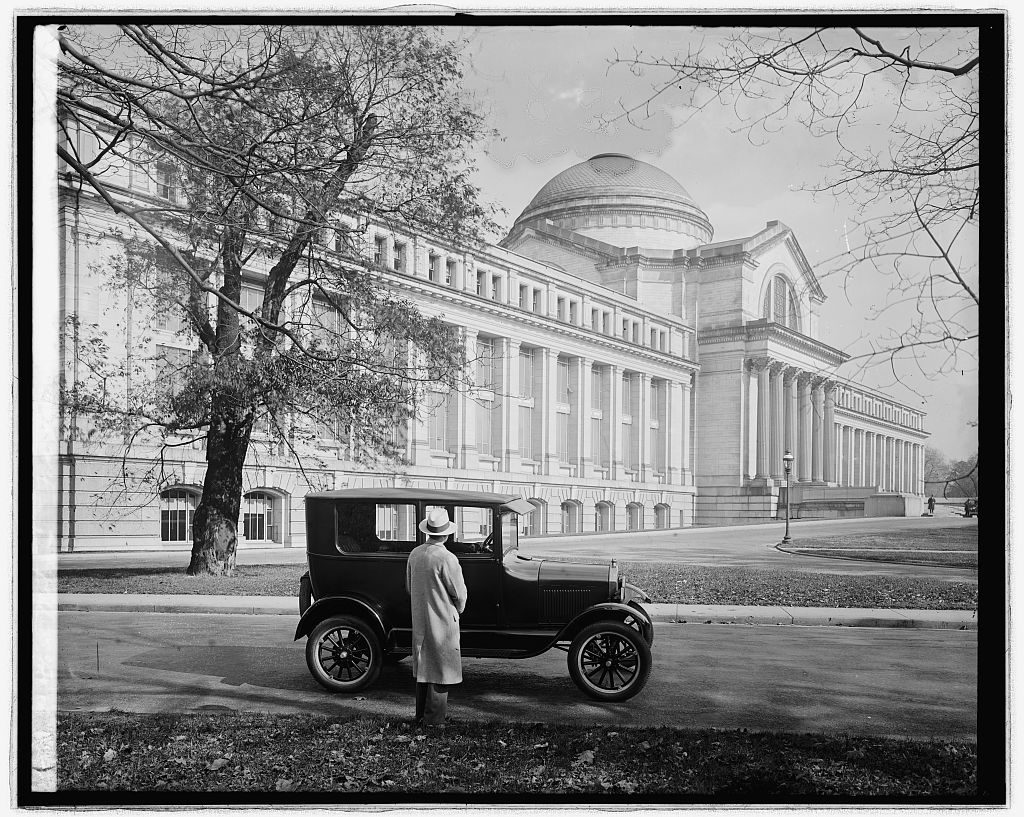
In 1941, Henry Ford publicly demonstrated an experimental car whose body used plastic panels made with agricultural fibers. The demonstration is well documented as part of Ford’s interest in farm crops as industrial materials. What the car was, and what later retellings have added to the story, are easy to compress into a single sentence that is neater than the record.
A common version of the story says Ford unveiled a car made partly of hemp and powered by hemp fuel, and that the project ended because hemp was criminalized in the United States under the Marijuana Tax Act of 1937. That sequence does not hold together as a simple explanation. The 1941 demonstration took place after 1937. Whatever the Act’s effects on industrial hemp, it cannot be treated as a switch that was thrown to stop a car that Ford was still showing four years later.
The better-documented program associated with Ford and farm crops is the experimental plastic body, often discussed today in connection with soybean research. Contemporary accounts of the 1941 car emphasized a molded plastic body and the idea that agricultural materials might replace some steel. Popular later accounts have added hemp fibers and hemp fuel to that picture. Hemp as a fiber in a composite body is a different claim from a production car that ran on hemp fuel. The second claim is part of a widely repeated retelling; it is not as clearly established, from the public record used for this article, as the fact of the plastic-body demonstration itself.
It is also easy to overstate what the demonstration decided. An experimental body shown in 1941 was not a production automobile, and the absence of a later hemp-fueled Ford is not proof of a single legal cause. Ford’s interest in farm-based materials sat alongside the ordinary commercial and technical obstacles that experimental vehicles face.
Research into plant-based fuels, including fuels derived from oilseeds, has continued in the decades since. That later work is its own subject. It does not require the 1941 car to have been a completed hemp-fuel project, and it does not revive the 1941 demonstration as a lost production model. If the Ford experiment still matters, it is as an early public attempt to treat crops as industrial feedstock, and as a reminder to keep the documented demonstration separate from the legend that grew around it.