By Olympic Equipment
Plan an EV lift purchase around the exact vehicle, approved lifting points, arm reach, battery clearance and intended service work.
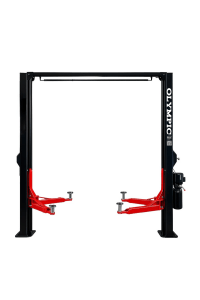
Start with the vehicle, not an EV label
An electric vehicle does not become compatible with a lift simply because a product description mentions EVs. The purchase needs an application review for the exact vehicle and the work you intend to perform. Collect the year, make, model and configuration before comparing equipment, and ask how the proposed lift will be evaluated against that information.
Keep vehicle-manufacturer lifting information separate from the lift manual. Each addresses a different part of the application. The vehicle information identifies approved support locations and restrictions; the lift documentation defines its own operating limits and permitted equipment. Neither document can be replaced by a photograph of a similar car in another garage.
Confirm support points and access
Tesla’s current Model 3 owner instructions, for example, identify designated body lifting points and warn against placing lift pads beneath the battery or side rails. That is a model-specific example, not a diagram for every Tesla or every EV. Use the instructions applicable to your actual vehicle, including its model year and configuration.
Ask the lift supplier to review arm reach, pad approach, collapsed clearance and approved adapters against the vehicle information. A headline capacity does not answer those questions. Do not plan around homemade spacers or assume that an adapter advertised for a vehicle is approved for the particular lift as well.
Define the service job precisely
Routine wheel service, underbody inspection and battery removal are different equipment questions. Tell the supplier which work is planned and which work is outside your shop’s scope. If battery or major component removal is contemplated, have qualified professionals evaluate the complete support arrangement and relevant vehicle service procedures before ordering.
Do not treat a general-purpose transmission jack, a lift accessory or an empty floor area as an approved battery-handling solution. A component-handling plan must be established independently. This guide does not provide high-voltage service, battery removal, rigging or lifting instructions.
Review weight and the actual configuration
Provide reliable vehicle weight information and explain modifications or equipment that affect the application. Ask the supplier what load and distribution information is required. Avoid substituting a battery-capacity figure, towing rating or an approximate internet weight for the information the application review needs.
If the shop will handle several EVs, make a vehicle list rather than asking for one universal answer. Include the difficult cases and planned future vehicles. A confirmed application for one car should not silently become permission to lift every vehicle with the same badge or body style.
Plan the bay as a working space
Give the installer a dimensioned bay plan, including doors, overhead equipment and adjacent work areas. Explain where charging equipment and cables are located so qualified professionals can evaluate the layout. Tesla’s cited instructions also prohibit raising the Model 3 with its charge cable connected; follow the correct vehicle instructions rather than using this example as a complete operating procedure.
Ask how training, vehicle-specific information and updates will be made available to operators. A confirmed purchase decision should be easy to trace later: which vehicle was reviewed, which lift and accessories were proposed, and which documents supported the answer. Keep that record when your vehicle list changes.
Send a useful application inquiry
Your inquiry can include the vehicle identity, intended work, available vehicle lifting information, bay dimensions and the exact lift under consideration. Ask Olympic Equipment to identify missing evidence and provide a model-specific response. Request written confirmation rather than interpreting a sales category as approval.
Use Olympic’s current manuals and ALI’s lift-buying guidance as references, then have qualified professionals resolve outstanding questions. A careful EV purchase is a documented match between vehicle, equipment, site and task. It is not a claim that a particular capacity or lift style works for all electric vehicles.
Sources and related resources
Tesla Model 3: Jacking and lifting
Continue reading in the Motorcar lift guide library or browse the Olympic lift video library.
Published by Olympic Equipment, a seller of vehicle lifts and shop equipment with a commercial interest in equipment purchases. Prepared with AI assistance; no independent technical review is represented. This educational planning guide does not replace current manufacturer instructions, qualified training or a site-specific professional assessment. First published on Motorcar Magazine. Sources checked October 26, 2026.


