ART DECO ENGINEERING / 1936
Look at a Cord 810 with its lights tucked away and the nose seems almost impossibly clean for a 1930s automobile. Then imagine the driver reaching for a crank to bring a headlight into view. This is the attraction of the Cord: a futuristic appearance supported by mechanisms that still invite a wonderfully physical interaction.
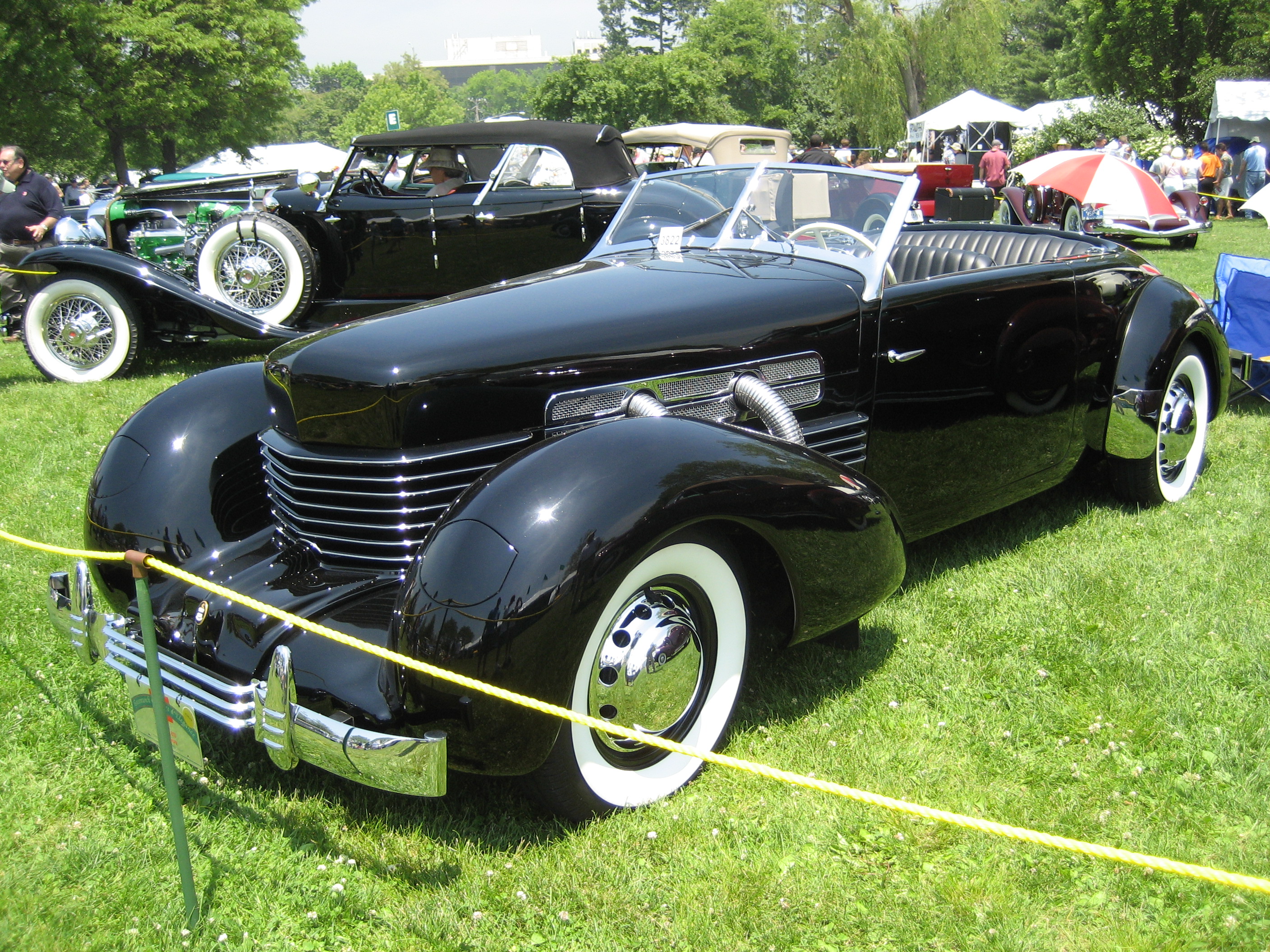
Two cranks behind a clean nose
Heritage Museums & Gardens describes the disappearing headlights as individually raised and lowered using hand cranks on the dashboard. One is in front of the driver and the other in front of the passenger. The concealed lamps were real production equipment, but operating them was a more hands-on affair than the body might suggest.
That detail makes the car particularly enjoyable to study. A modern viewer may automatically imagine an electric motor behind any hidden headlamp. The Cord is a reminder to investigate the control as well as the result. Mechanism and appearance belong in the same story.
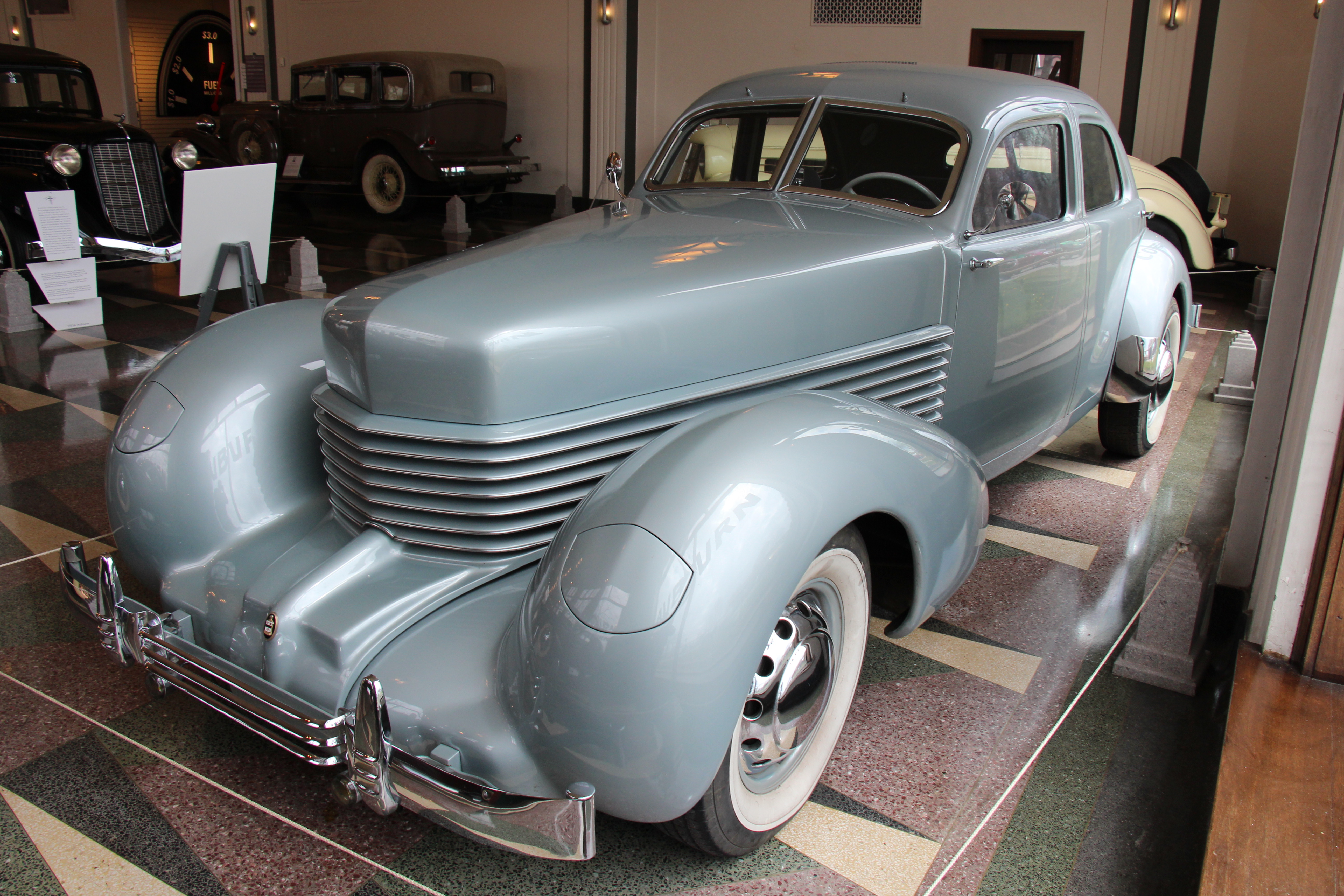
The low body had a mechanical explanation
The Studebaker National Museum credits Gordon Buehrig, assisted by Vince Gardner, with the streamlined shape. Its description highlights front-wheel drive and unitized body construction alongside the low silhouette. These were substantial layout decisions, not merely decorative flourishes.
Heritage Museums explains that eliminating the usual rear drive train allowed a lower car without running boards. The relationship between the mechanical package and the body is worth looking for in side views: the stance is part of the engineering argument. A striking design often becomes more interesting when its proportions have a reason.
A short production life, and a second life for the shape
The Cord’s arrival at the New York Auto Show in November 1935 drew intense attention, according to Heritage Museums. It also records the reputation for unreliability that followed the introduction of numerous new features. The Studebaker museum adds development difficulties and corporate financial trouble to the explanation for production ending in 1937.
One less familiar detail follows the end of the Cord itself: the body shell went on to be used for the Hupp Skylark and Graham Hollywood. A design can outlive the manufacturer that made it famous, even while its original engineering combination disappears.
The 810 therefore rewards more than an admiring glance at its grille. Look for the missing running boards, study the fender-mounted lamps, and consider how the driver controlled them. It is an Art Deco landmark with a working explanation for much of its visual drama.
Sources & further reading
Heritage Museums & Gardens: 1936 Cord 810 Westchester
Studebaker National Museum: 1936 Cord 810