SMALL CARS / BIG IDEAS
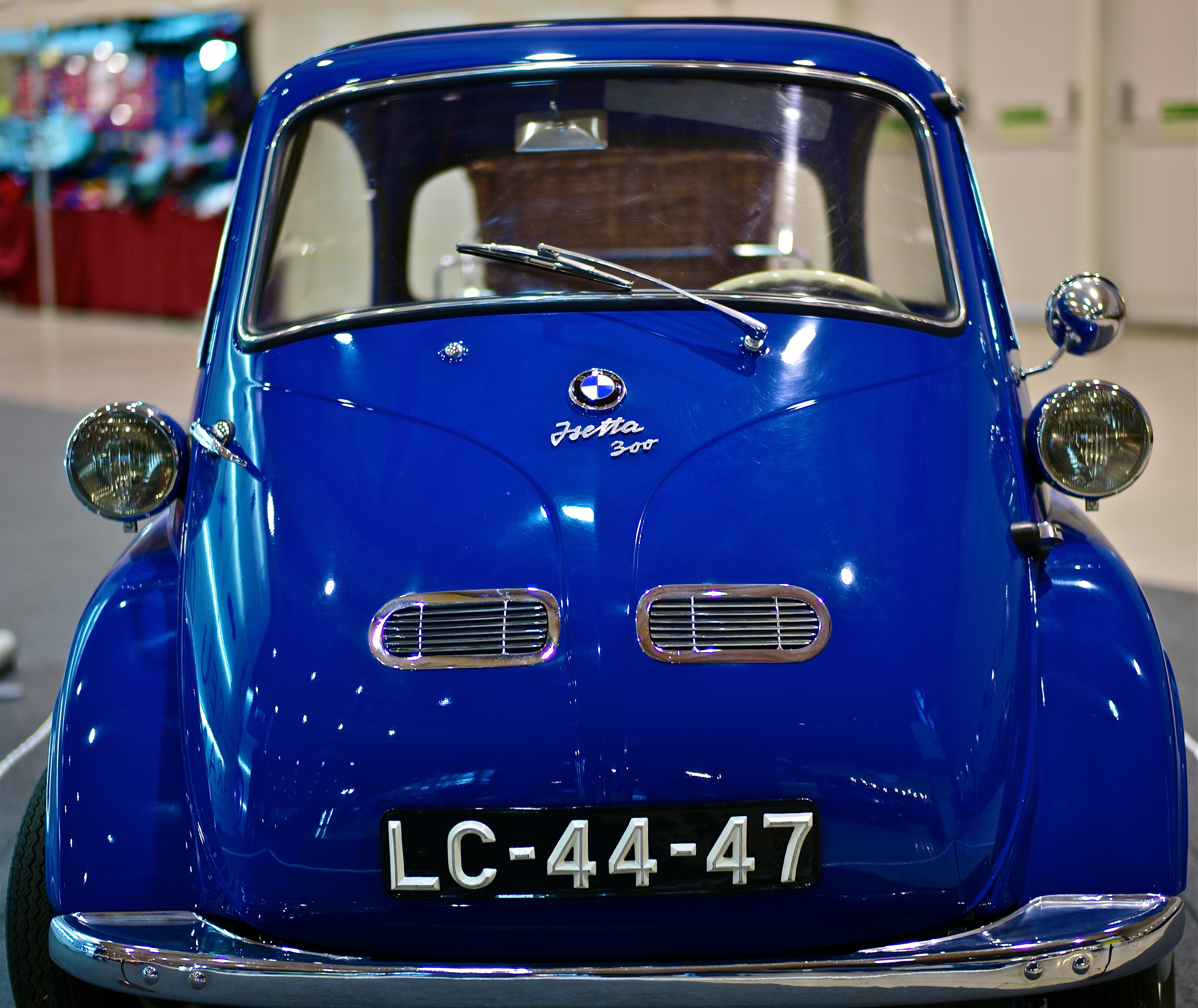
The badge says BMW, but the Isetta’s story crosses the Alps. This tiny car began as an Italian design before becoming one of the most recognizable vehicles BMW ever sold. Its unusual entrance makes a memorable photograph; the decisions behind it reveal a company looking for a very practical answer to a difficult market.
The design came from Iso
According to BMW Group Classic, the manufacturer signed a license agreement with Milan-based Iso for a small car with a front door. BMW needed a model that could sell well and be economical to produce. The Isetta filled a very different role from the large luxury cars associated with prestige motoring.
The engine was not simply carried over unchanged. BMW installed a single-cylinder, four-stroke unit derived from its R 25 motorcycle in place of the original two-stroke arrangement. The Isetta 250 entered production in spring 1955 with 12 horsepower. It was a small-car solution assembled from both licensed ideas and BMW’s own engineering resources.
The entrance is the whole front of the car
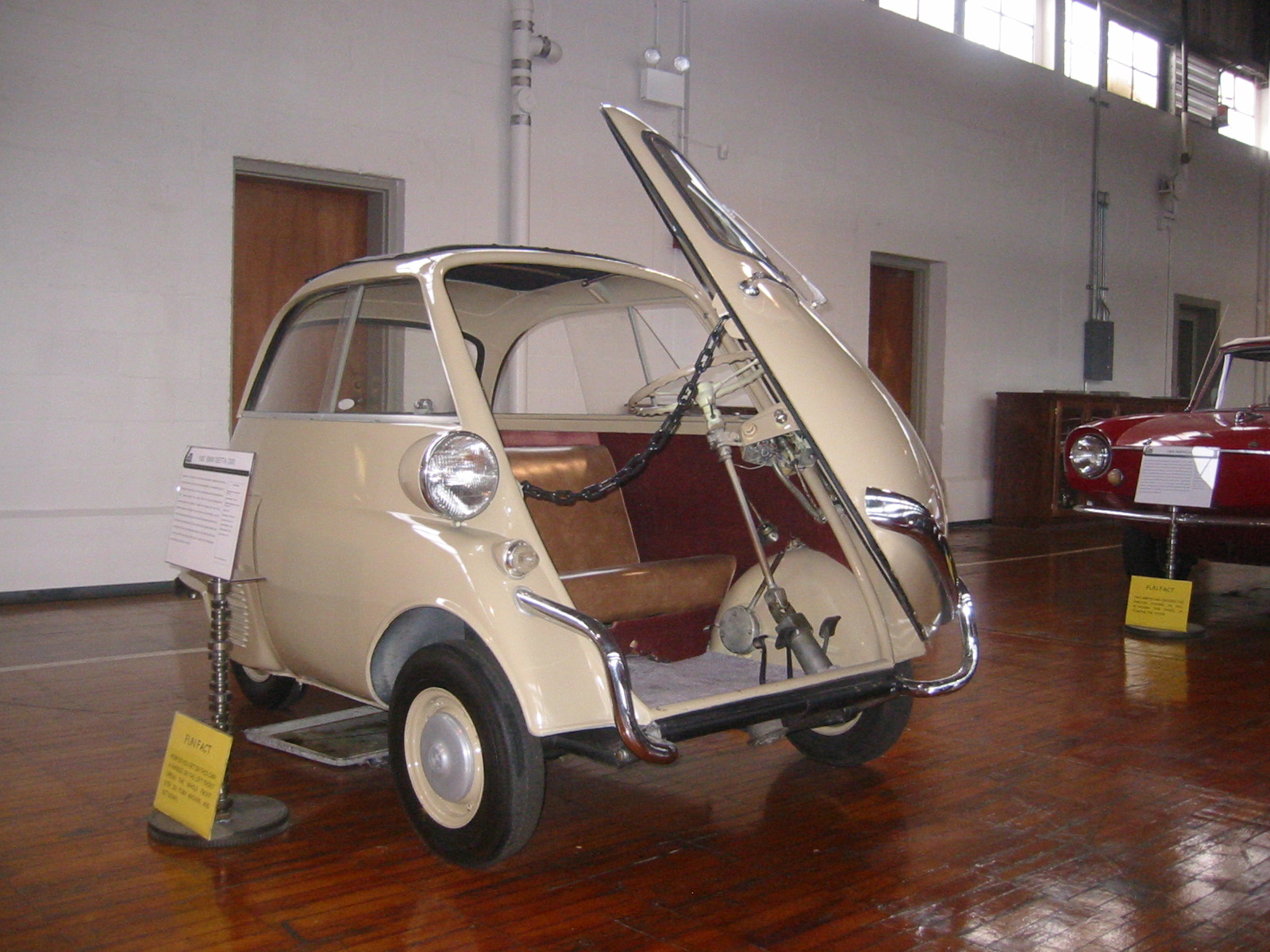
The Lane Motor Museum’s 1957 Isetta 300 illustrates the basic arrangement: one door and seating for two. Opening the nose rather than a conventional side door makes the car immediately legible as a packaging experiment. So much of its personality comes from the way people get inside.
There is an important visual distinction here. An Isetta with its door closed looks like a compact sculptural object; with the door open, the layout becomes understandable. That is why both views belong in its history. A charming exterior photograph alone misses the feature that most clearly explains the car’s design.
A serious business behind the bubble-car image
BMW’s archive records more than 10,000 sales in the first production year and approximately 161,000 built between 1955 and 1962. Those figures help restore proportion to a car often treated as a novelty. Buyers were purchasing transportation, not a future museum exhibit.
The Isetta also challenges the habit of reading a brand’s entire past through its modern image. A company now strongly associated with performance made an extraordinary impression with modest power and a remarkably compact cabin. The lesson is historical rather than sentimental: successful manufacturers have often changed the kind of problem they were willing to solve. The Isetta makes that adaptability visible every time its front door swings open.
Sources & further reading
BMW Group Classic: Isetta model series
Lane Motor Museum: BMW Isetta 300, 1957