DESIGN HISTORY / 1938
A concept car is easy to picture on a rotating platform, surrounded by lights and promises. Buick’s Y-Job offers a different image: General Motors’ design leader taking an experimental automobile onto real roads. Its importance lies as much in that everyday use as in its dramatic, low-slung body.
An experiment built around a real Buick
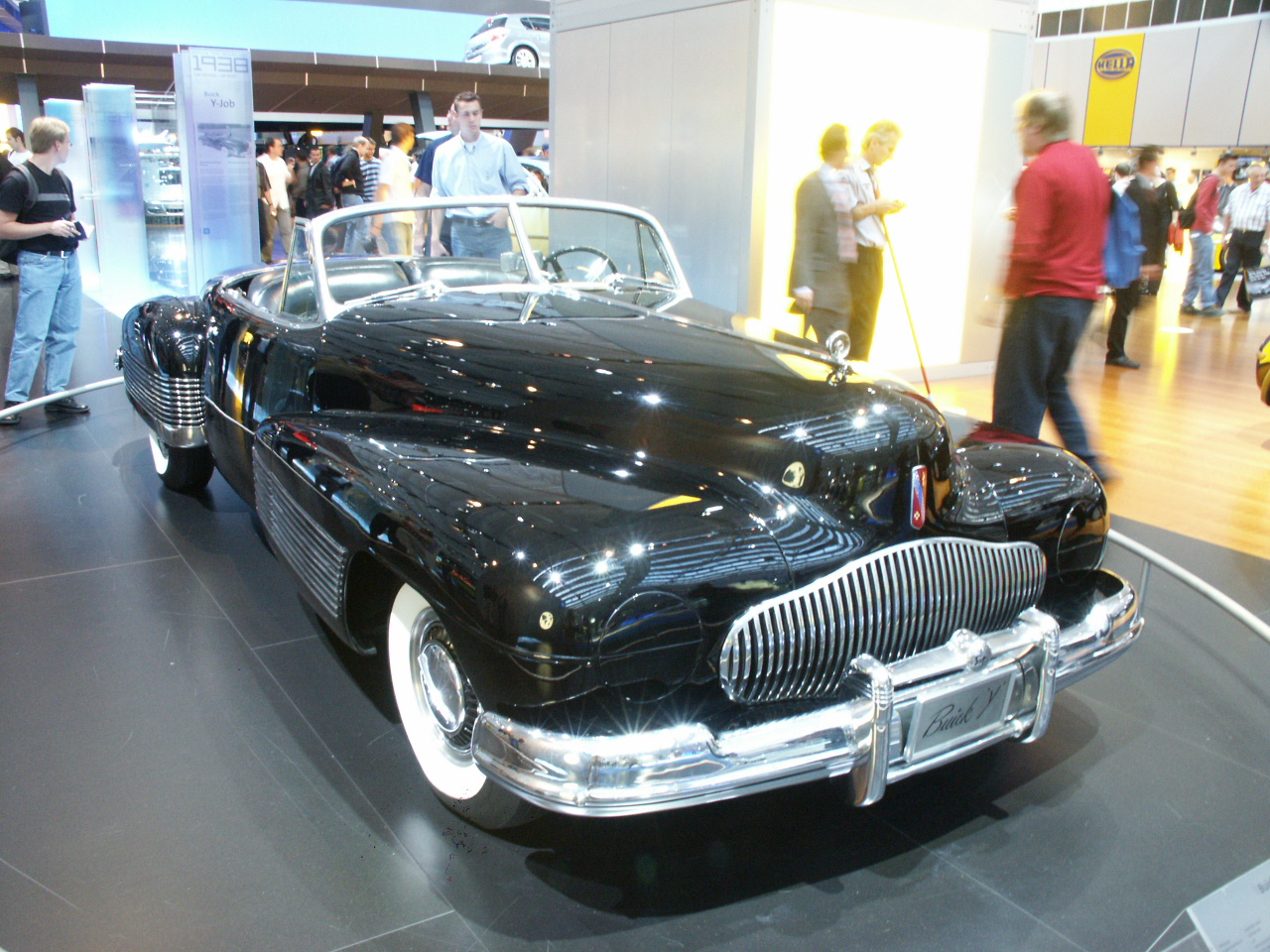
GM’s collection record identifies the 1938 Y-Job as the work of Harley Earl and the organization now known as GM Design. Beneath the futuristic appearance was a 1937 Buick chassis. That combination is revealing: a familiar foundation made room for a very unfamiliar vision of what an automobile could become.
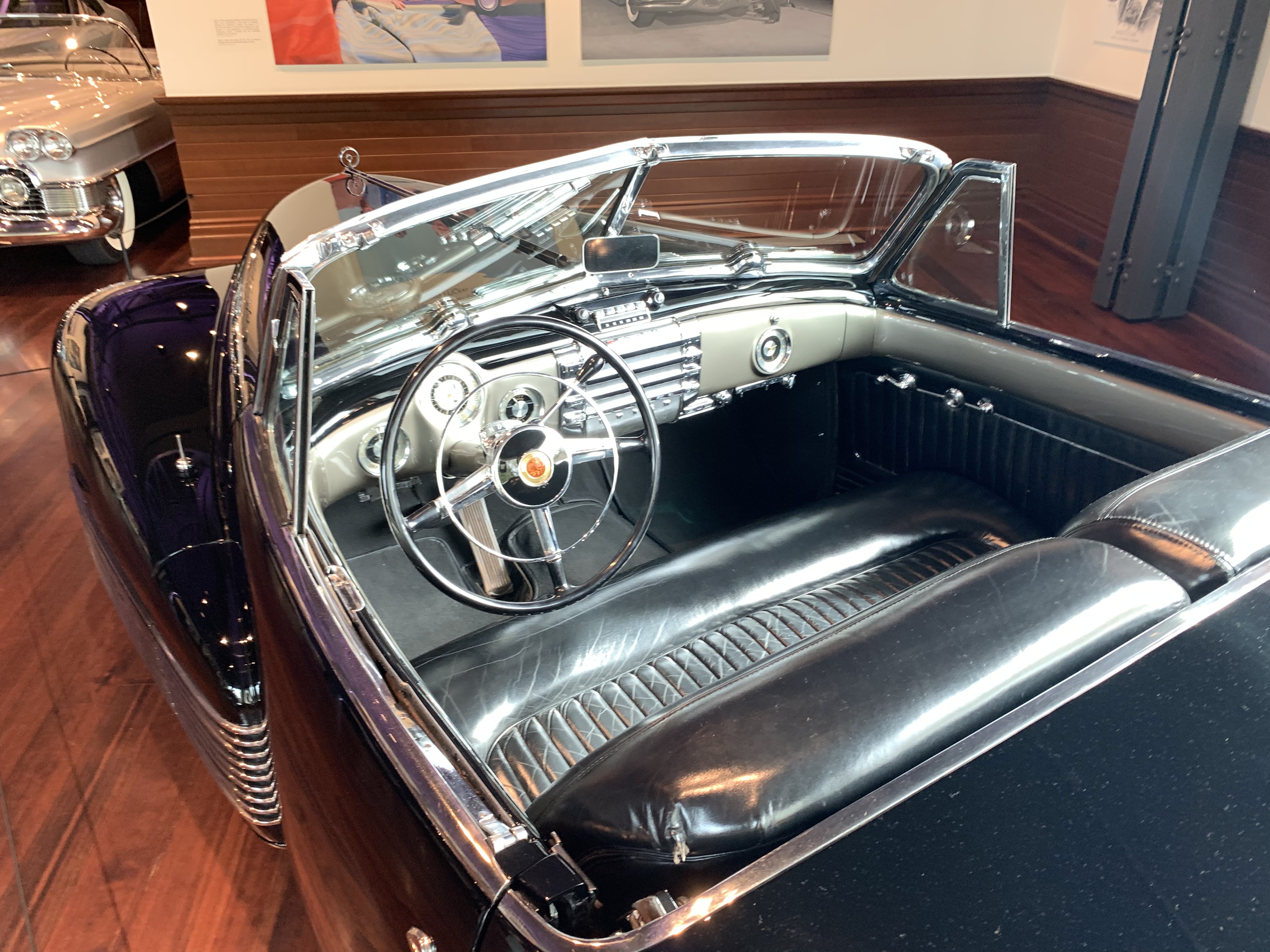
Its feature list included concealed headlights, flush door handles, electrically operated windows and a convertible roof hidden beneath a metal deck. Rather than looking like equipment bolted onto an existing body, those details worked toward a cleaner, more continuous form. The mechanisms helped create the styling.
Why the missing running boards matter
GM’s heritage overview highlights the low body, long rear deck, horizontal emphasis and absence of running boards. These are easy details to overlook now. Against the upright shapes associated with earlier cars, they explain why the Y-Job looked like a proposal for another era.
Study a side view before focusing on the nose. The relationship between the wheels, cabin and body does much of the work. The car presents a broad, flowing silhouette rather than a collection of separate-looking components. That is a useful way to read any historic design: start with its overall composition, then examine the ornaments.
A concept with a working life
GM describes Earl using the Y-Job as both a test bed and personal transportation before and after World War II. It also places the car at the beginning of its concept-car tradition, which developed into the better-known dream cars and Motorama displays of the 1950s.
That road-going role changes the story. A designer living with a car encounters things a show audience cannot: access, visibility, controls and how the shape looks in ordinary surroundings. The Y-Job was a means of exploring ideas in use, as well as presenting them in public.
Calling it a landmark concept is justified by GM’s own historical account. Calling every later feature its exclusive invention would be a much bigger claim. Its lasting achievement was bringing an unusually coherent set of ideas together in a car that could be driven, studied and remembered.
Sources & further reading
GM Heritage: 1938 Buick Y-Job Concept
GM Heritage: the Y-Job and the development of concept cars