FRENCH INNOVATION / 1955
Few cars make the relationship between comfort and engineering as visible as the Citroën DS. Its smooth shape suggests effortless travel, while the technical ideas beneath it reveal how deliberately that impression was pursued. The DS was a sensation because it offered a different vision of the automobile as a whole.
Three talents behind one extraordinary car
DS Automobiles’ historical account identifies three central figures: André Lefèbvre, an engineer trained in aeronautics; Paul Magès, who developed the hydraulic system; and stylist and sculptor Flaminio Bertoni. It dates the public debut to October 6, 1955, at the Paris Motor Show.
The hydraulic ambition extended beyond suspension to steering, braking and clutch operation on the DS. That broad integration is the useful historical point. Calling it a car with an unusual ride understates the extent to which the designers reconsidered the relationship between driver, controls and chassis.
Do not give a 1955 car every later feature
The DS evolved considerably. The manufacturer’s 70-year retrospective places the famous headlamp facelift in 1967 and describes swiveling lamps on the range-topping Prestige, Pallas and Cabriolet versions. A photograph of that later nose should not be presented as the original 1955 launch car.
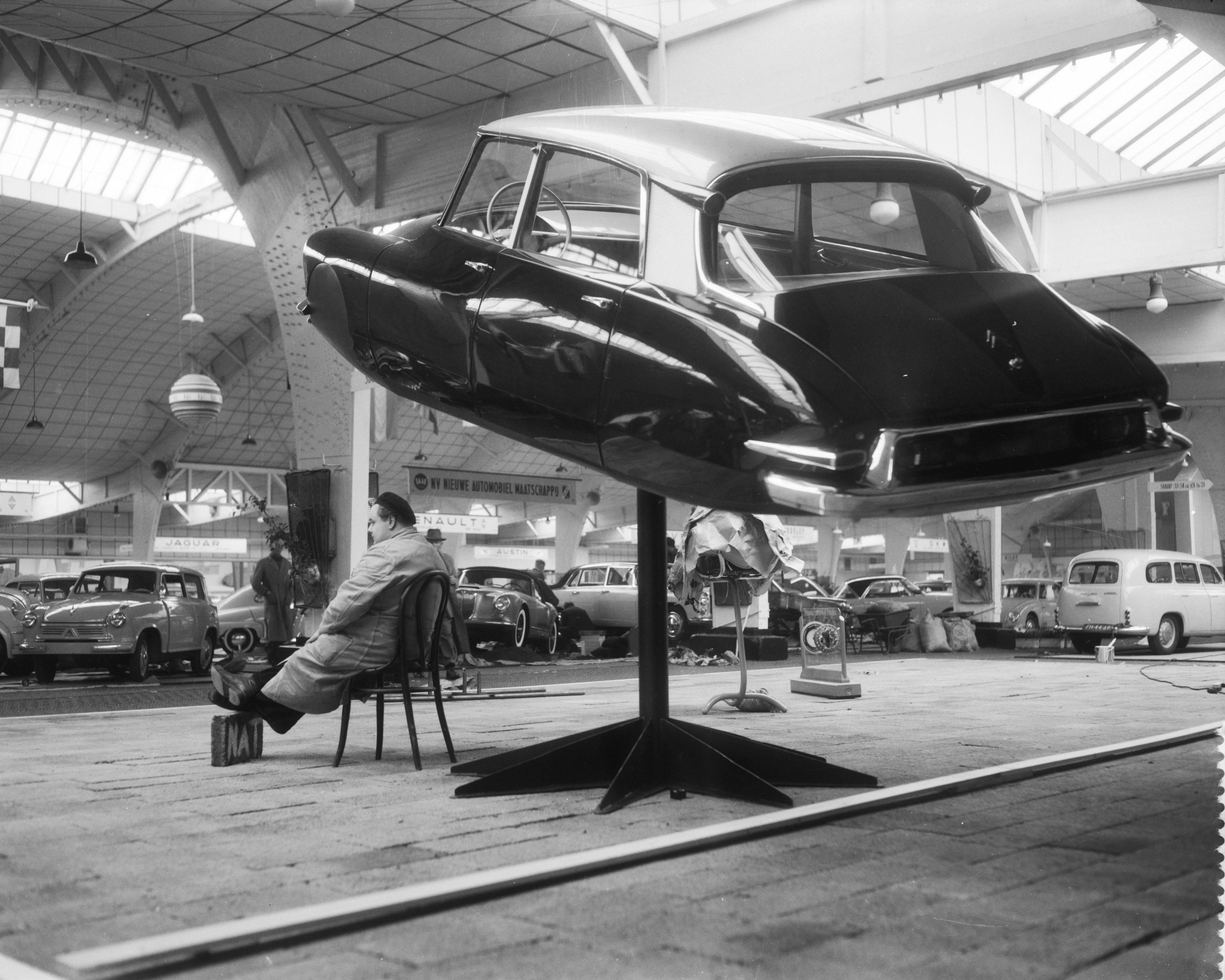
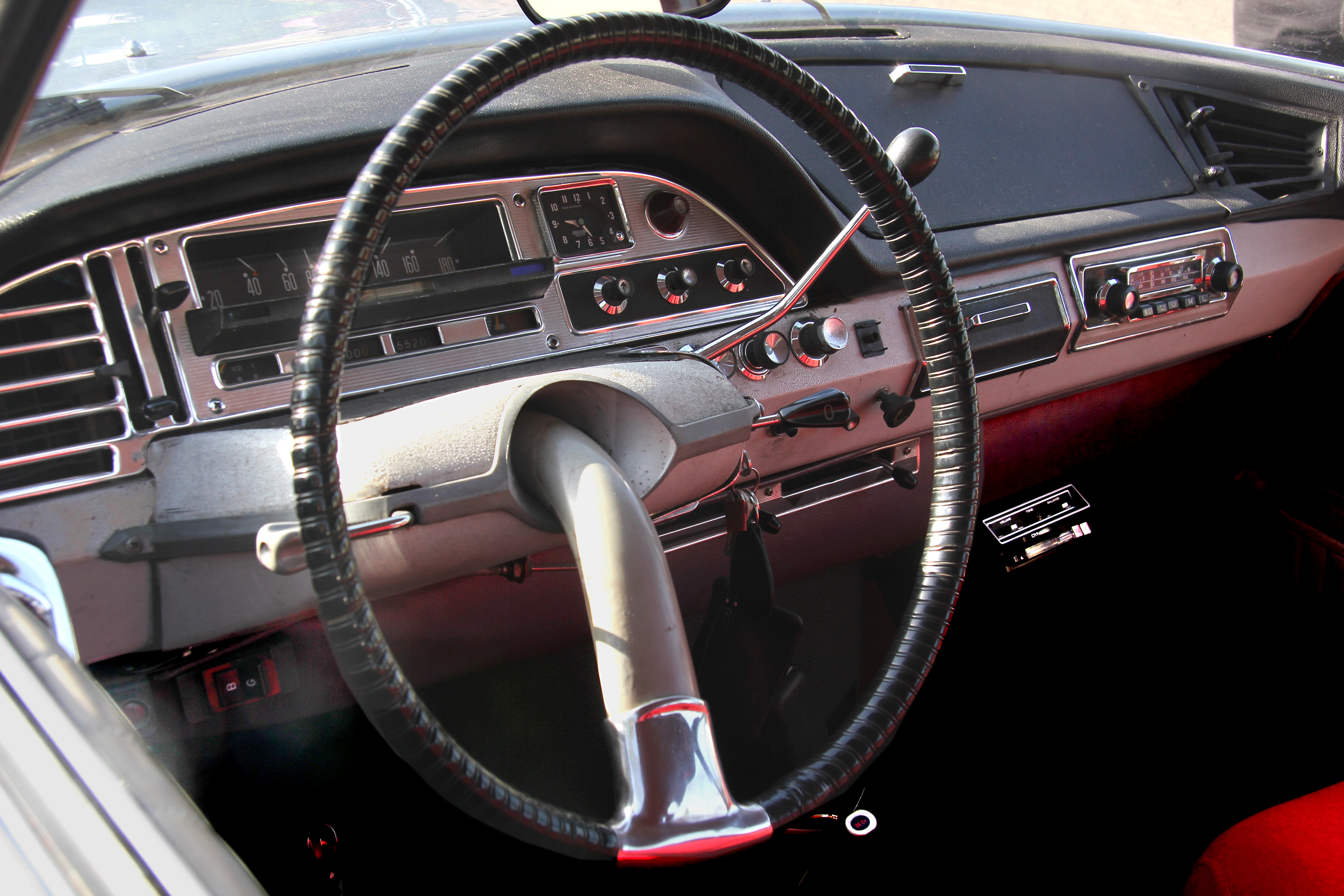
The distinction is useful at a show or museum. Begin with the headlamps and dashboard before relying on the general outline. A long-running design can retain its identity while its details change substantially. Our period exhibition photograph and separate early-style dashboard view help show the DS without borrowing a later car’s face.
When the car became an actual sculpture
One of the retrospective’s most surprising episodes took place at the 1962 Paris Motor Show. A DS was displayed vertically, without wheels and with its underside enclosed, slowly rotating in a circular pit. It was an unusually theatrical way to present an automobile whose body already looked like an object from another age.
That display tells us something about the DS’s public identity. Its shape could be appreciated apart from the ordinary visual cues of a car sitting on tires. The engineering story and the artistic presentation reinforced one another.
The DS remains rewarding precisely because neither side is enough alone. The silhouette draws attention, the hydraulic thinking explains its ambition, and the changing details locate an individual example in time. It is a classic best understood by looking closely, rather than treating a twenty-year family of cars as a single unchanging object.
Sources & further reading
DS Automobiles: 1955–2015, DS Is 60
DS Automobiles: DS, A 70-Year History