RACING IDEAS / ROAD-CAR ICONS
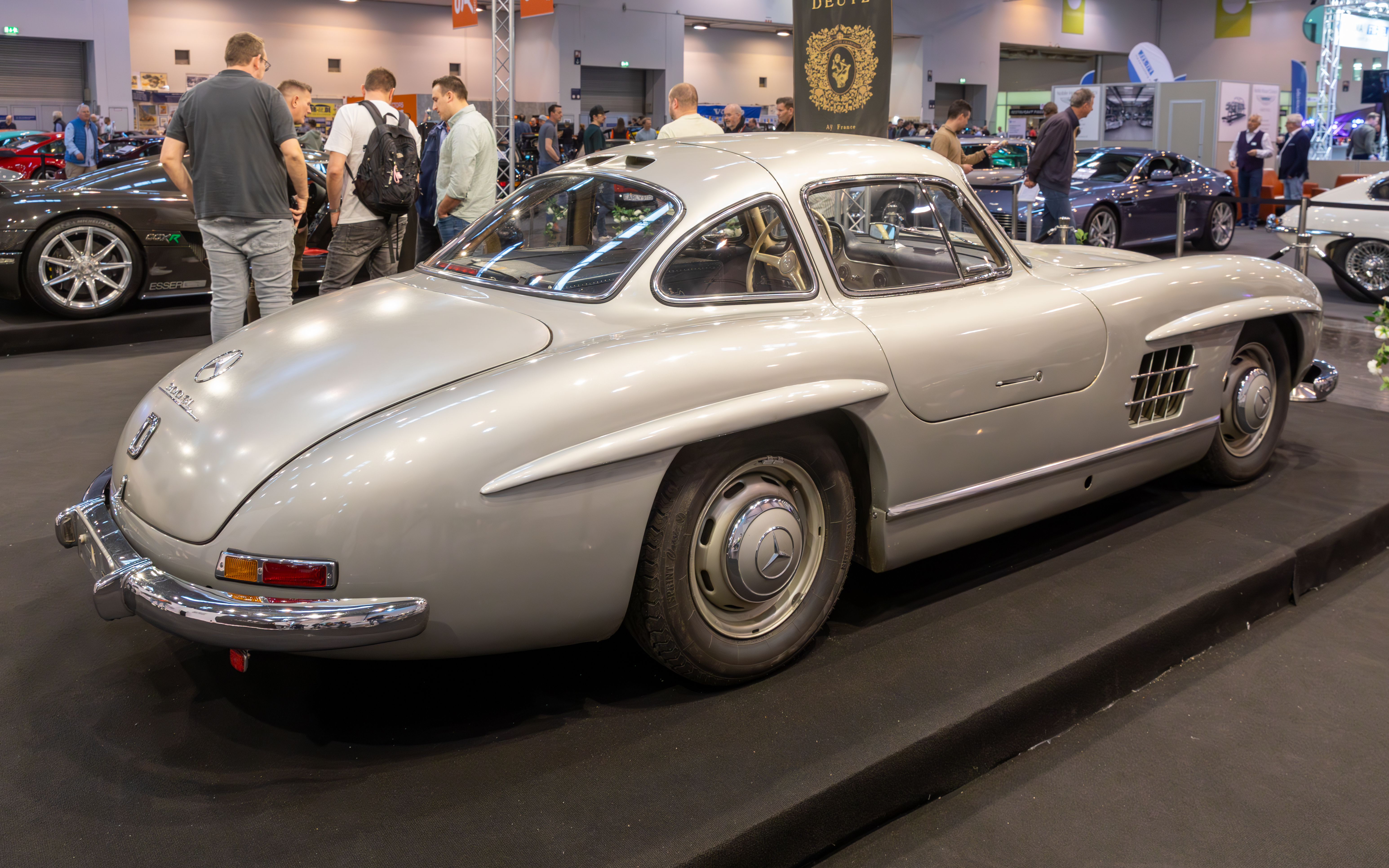
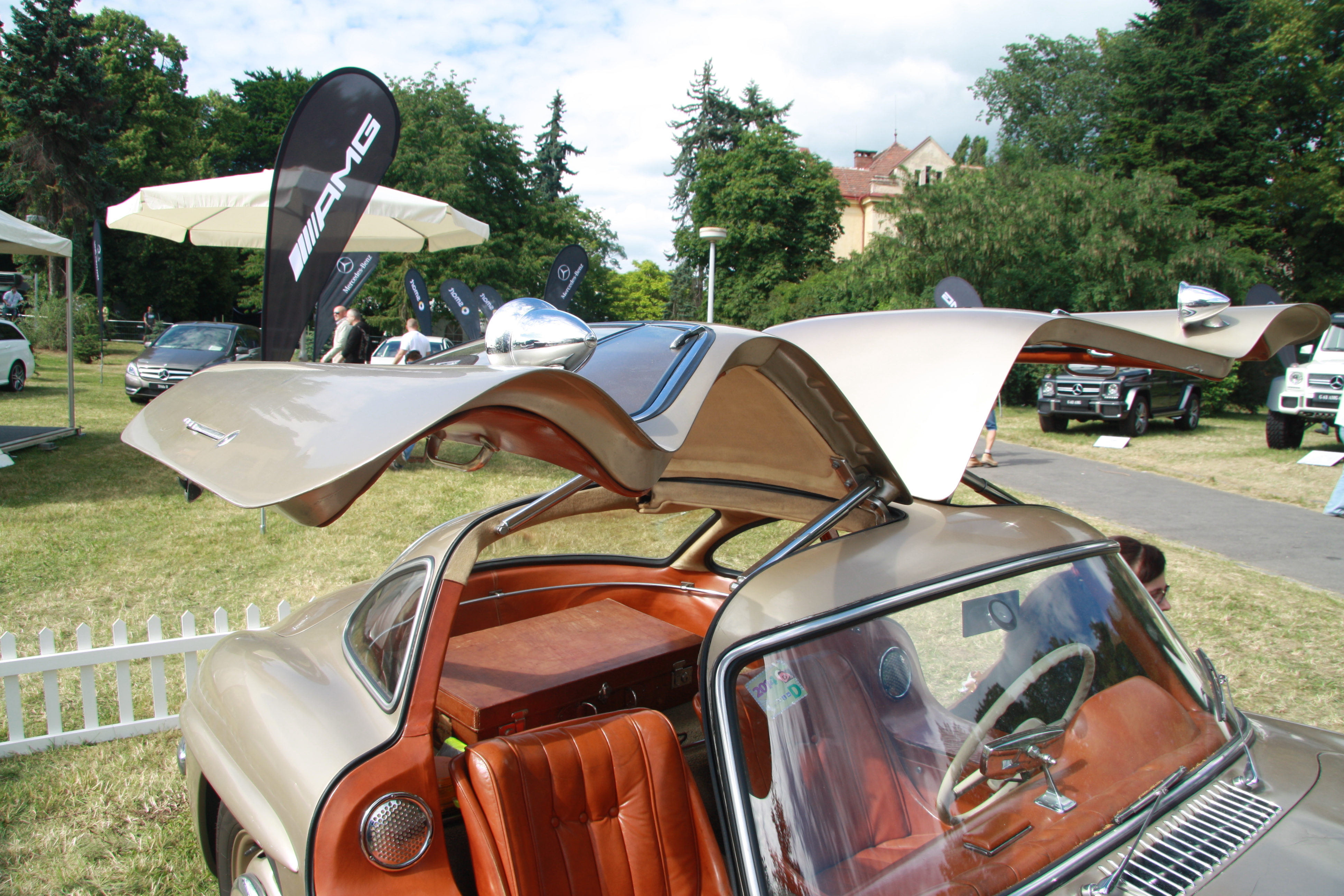
The doors are usually the first thing anyone remembers about a Mercedes-Benz 300 SL Coupé. Raised above the roof, they turn a parked car into a spectacle. Their origin is less theatrical and more satisfying: they were a solution to the shape of the structure underneath the body.
The frame set the terms
Mercedes-Benz’s W 198 history explains that the road car inherited a tubular spaceframe derived from the 1952 racing car. The frame’s height made conventional doors impractical. Hinges at the roof allowed access without cutting away the high side structure that gave the frame its shape.
That reverses the usual first impression. The car did not need an extraordinary frame because someone wanted extraordinary doors. The structural arrangement created the access problem, and the doors became the memorable answer. It is an unusually clear example of engineering helping create a design identity.
New York, rather than a European unveiling
The production 300 SL appeared at the International Motor Sports Show in New York in February 1954. Mercedes-Benz USA’s history places it beside the near-production 190 SL prototype and emphasizes importer Max Hoffman’s role in encouraging the cars’ development.
That location is an important part of the story. The Gullwing was a German sports car whose public introduction reflected serious interest in American buyers. Reading it only as a European racing derivative leaves out the market that helped turn the idea into a road-going product.
More than a famous hinge arrangement
The manufacturer’s technical history also highlights fuel injection and an engine inclined to the side to permit a low front profile. As with the doors, the body shape and mechanical packaging were closely connected. The parts that attract attention are easier to understand when their underlying constraints are visible.
Look at a 300 SL from the side with a door raised, then with it shut. The first view explains access; the second reveals how completely the opening is absorbed into the roof and body. Neither view alone tells the whole story.
It is also worth keeping the names straight: this article concerns the W 198 production Coupé introduced in 1954, while the 1952 racing SL supplied the earlier foundation. The two are related rather than interchangeable. That distinction lets the road car keep its own achievement: translating an uncompromising racing idea into one of the most recognizable automobiles of the postwar years.
Sources & further reading
Mercedes-Benz Classic: W 198 model history and spaceframe
Mercedes-Benz USA: Sport, luxury, lifestyle—the SL