FRENCH ICON / 1936–38
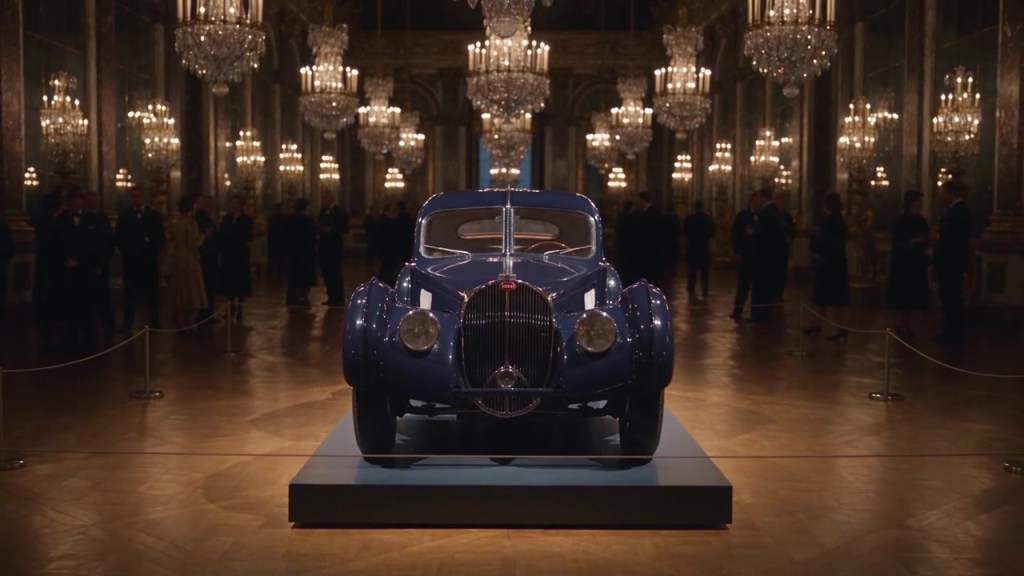
Between 1936 and 1938, Jean Bugatti, the son of founder Ettore Bugatti, shaped one of the most striking cars ever built: the Type 57 SC Atlantic. Only four of the coupés were created, and just three survive.
A seam that could not be welded
The design began as the Aérolithe, or Coupé Aérolithe, prototype. Its Elektron magnesium-alloy body could not be welded, so the panels were riveted along a raised dorsal seam that runs from the split bonnet, over the roof, and down the pointed tail. Production Atlantics were built in aluminum, but they kept that riveted spine. The name honors aviator Jean Mermoz, who pioneered South Atlantic air crossings. A 3.3-liter straight-eight produced up to 200 PS, and Bugatti cites a top speed in excess of 200 km/h.
Rothschild, Lauren, and a car that vanished
The first customer car, chassis 57374, was built for the British banker Victor Rothschild. It was originally finished without a supercharger and in grey-blue, and was later converted to SC specification. The last, chassis 57591, known as the Pope Atlantic, was completed in May 1938 for R. B. Pope and is now owned by Ralph Lauren.
The second car, chassis 57453, was built for Jean Bugatti himself. Finished in deep black, it was used as a show and brochure car and is remembered as La Voiture Noire. There is no confirmed trace of it after 1938, and it has never been found.
Sources
- Bugatti Newsroom, “The Bugatti Type 57 SC Atlantic – a style icon,” February 22, 2019
- Bugatti, La Voiture Noire and the four Atlantics
- Bugatti Newsroom, Guggenheim Bilbao exhibition (surviving cars, Ralph Lauren, the lost second car)
- Mullin Automotive Museum, chassis 57374 fact sheet (PDF)
Video credits: Narration generated with an AI voice (ElevenLabs) from a script based on the sources linked above. Footage created for Motorcar Magazine.