By Olympic Equipment
Review tire and wheel coverage, assist features, protection, utilities and training before selecting a tire changer for demanding applications.
A category claim is the beginning of the review
A tire changer advertised for low-profile or run-flat work still needs to match the actual wheels and tires your shop sees. The useful purchasing question is not simply whether the machine has an assist arm. It is whether the exact configuration, accessories and instructions cover your intended work with trained operators.
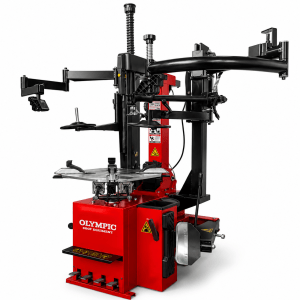
Olympic’s T650 listing describes run-flat and low-profile applications and pneumatic assist features. That description is a reason to investigate the model, not a promise that it handles every wheel or tire bearing those labels. Ask for written application confirmation when a particular assembly is important to the purchase.
Build an application list
Record the common wheel diameters, widths and tire dimensions your shop expects to service. Include the most demanding assemblies, unusual finishes and vehicle-specific restrictions. Use actual customer work or the planned service menu as the basis. A list built only from your easiest jobs can hide the reason you wanted upgraded equipment.
Send representative wheel-and-tire details to the supplier and ask what information is missing. Keep clamping ranges, maximum tire dimensions and other limits distinct; one large number does not describe every part of the machine’s coverage. Have the supplier explain the relevant limits using the current model documentation.
Ask what the assist equipment is for
Request an explanation of each assist feature and the applications it supports. Confirm which arms, tools and protective pieces are included in the quoted configuration. Ask how an operator learns to use them correctly. Extra attachments are useful only when they are appropriate to the job and covered by instruction.
Do not judge capability by counting arms in a photograph. Different designs can serve different purposes, and a demonstration on an easy assembly may not answer a difficult application question. Ask the provider to arrange an appropriate demonstration or documented review without treating it as a guarantee for all future work.
Review wheel protection and operator preparation
Ask about the manufacturer-specified contact tools, protective components and replacement parts for the intended wheels. Establish how worn or missing protective pieces will be identified and replaced. Do not substitute improvised pads or assume an attachment from another machine is suitable because it fits physically.
Training should address the exact equipment, tire and wheel requirements, including relevant pressure-monitoring-system considerations. This guide provides no mounting, demounting, inflation or bead-seating procedure. Those operations require the proper equipment, current instructions and trained personnel; a buying article cannot establish operator competence.
Confirm utilities and installation space
Obtain the actual supply and installation requirements for the chosen configuration. Have qualified professionals evaluate electrical and compressed-air arrangements. Include working movement, access to controls, wheel handling and nearby storage in the layout. The shipping crate dimensions are not the operating footprint.
Request the correct current manual before purchase. A manual for a different Olympic tire changer can illustrate the kind of information to request, but it does not establish the T650’s settings or procedures. Keep the manual identity and revision with the final quotation rather than allowing product names to become interchangeable.
Compare a usable package
Ask the quote to identify the machine, included accessories, training, installation scope and available service support. Separate confirmed applications from applications still under review. If a particular run-flat assembly has not been verified, record that gap instead of expanding the sales claim.
Olympic’s tire-changer collection provides a starting point for comparing models. The strongest decision matches the shop’s real work with documented equipment coverage and an operator-training plan. That is more useful than choosing the machine with the longest feature list or assuming that one description covers every demanding tire.
Sources and related resources
Olympic T650 product information
Continue reading in the Motorcar lift guide library or browse the Olympic lift video library.
Published by Olympic Equipment, a seller of vehicle lifts and shop equipment with a commercial interest in equipment purchases. Prepared with AI assistance; no independent technical review is represented. This educational planning guide does not replace current manufacturer instructions, qualified training or a site-specific professional assessment. First published on Motorcar Magazine. Sources checked October 26, 2026.


