By Olympic Equipment
Compare balancing and alignment as separate services, then plan equipment, vehicle coverage, training and space around the work your shop intends to offer.
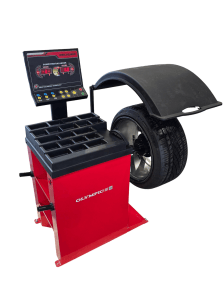
They answer different questions
Wheel balancing addresses imbalance in a rotating wheel-and-tire assembly. Wheel alignment concerns the vehicle’s wheel geometry and the applicable vehicle specifications. A shop may offer both services, but buying a balancer does not create an alignment bay, and purchasing an alignment system does not replace a balancer.
Hunter’s educational material explains imbalance-related vibration and discusses alignment concerns such as irregular wear and handling. Symptoms can have more than one cause, so neither a vibration complaint nor a photograph of tire wear is a complete diagnosis. Qualified technicians should evaluate the vehicle rather than selling one service as a universal cure.
Define the balancing work you want
List the wheel and tire assemblies the shop expects to handle. Include the demanding cases instead of planning around one ordinary passenger-car wheel. Ask the supplier about the proposed machine’s dimensional and weight limits, mounting equipment, applicable modes and the accessories needed for that list.
Review the actual manual before purchase. Olympic’s W820 manual is one model-specific example; its requirements should not be transferred to a different machine. Ask how training, calibration or verification procedures and replacement accessories will be supported. Do not assume every vehicle wheel can be correctly mounted using one supplied cone.
Define the alignment work separately
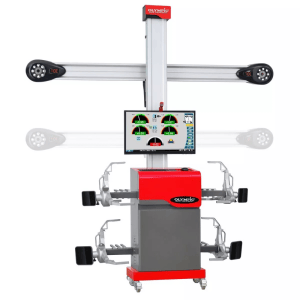
Write down the vehicle range, intended alignment services and how vehicle specifications will be accessed and maintained. Ask the supplier to identify the complete system: measuring equipment, wheel attachments, software, lift or rack arrangement and any required accessories. A quotation for a display cabinet alone may not describe a usable bay.
Have the equipment provider evaluate the proposed rack and its relationship to the alignment system. Door access, wheelbase range, measurement space and technician movement all belong in that conversation. Do not infer compatibility because a general-service four-post lift looks similar to an alignment lift in a catalog.
Plan the route through the shop
Sketch how vehicles and loose wheel assemblies will move between the lift, tire changer, balancer and storage. Include room for carts and the operator’s normal work. A machine that fits against a wall may still leave an awkward route when the bay is occupied by a long vehicle.
Separate installation requirements from the equipment’s footprint. Obtain the current electrical, air, foundation and positioning requirements for each selected machine, and have qualified professionals evaluate the site. Do not turn one machine’s supply specification into a requirement for the entire department.
Compare complete proposals
Ask each supplier to state what is included and what is optional. Training, mounting adapters, software access, installation, service and periodic checks can change the practical scope. Compare proposals against the same vehicle list and service menu so a lower equipment price is not mistaken for a more complete solution.
Build the business case from your own workload. Record the jobs you currently refer out, the skills available and the time needed to establish a reliable process. Avoid projecting a payback period from someone else’s shop or assuming every tire customer will purchase both services.
Choose a staged plan if needed
A shop can plan balancing and alignment as separate investments while leaving room for the later addition. Document what the first purchase will accomplish and what remains outside the service offering. That makes sales promises and technician expectations easier to keep aligned with the equipment actually installed.
Olympic’s wheel-and-tire equipment collection can help identify candidates for a detailed proposal. Start with the service you intend to deliver, confirm the complete equipment combination and arrange training before offering the work. The best choice follows your vehicle mix and workflow rather than treating balancing and alignment as interchangeable terms.
Sources and related resources
Hunter: Why wheels need balancing
Olympic tire-service equipment
Continue reading in the Motorcar lift guide library or browse the Olympic lift video library.
Published by Olympic Equipment, a seller of vehicle lifts and shop equipment with a commercial interest in equipment purchases. Prepared with AI assistance; no independent technical review is represented. This educational planning guide does not replace current manufacturer instructions, qualified training or a site-specific professional assessment. First published on Motorcar Magazine. Sources checked October 26, 2026.


