Published by Olympic Equipment
Twice a year, raise the car for no other reason than to look at it. A short check in spring and again in fall finds leaks, damage and rust while they are still small, and it is one of the simplest ways to get value from a lift.
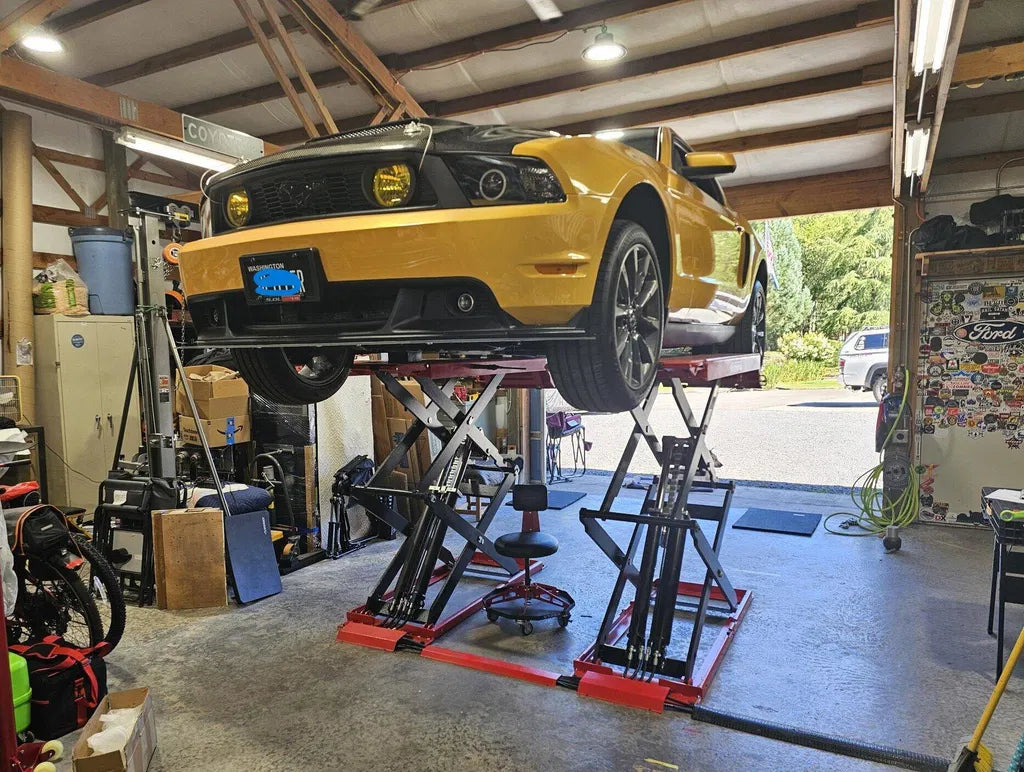
This is an inspection routine, not a repair guide. Raise and support the vehicle as your lift’s operating instructions direct before you go under it. If you do not have a set routine yet, start with How to Build a Pre-Lift Routine You Follow Every Time.
Before you start
Let the exhaust cool. Wear eye protection, because dirt and rust fall when you touch things. Bring a good light and your phone for photos.
Work from front to back
- Fluids. Look for fresh wet patches around the engine, transmission, differential, steering components and shock absorbers. Note the color and exactly where each one is.
- Brakes. Check the flexible hoses for cracks or bulges, and the metal lines for heavy rust or damp fittings.
- Steering and suspension. Look for torn rubber boots, cracked bushings, leaking shocks or struts, and shiny marks where a part has been rubbing.
- Driveline. A split boot on an axle joint usually shows as grease thrown around the area nearby.
- Exhaust. Check the hangers, look for rust-through, and watch for black soot at the joints, which points to a leak.
- Fuel system. Look for damp or stained areas along the lines and around the tank. If you smell fuel, stop and have it checked.
- Tires. The inner edge and inner sidewall are hard to see with the car on the ground. Look for uneven wear, cuts and bulges.
- Body and frame. Tell surface rust from flaking, layered rust. Check that drain holes are clear and that shields and splash guards are still attached. After a winter of road salt, look here most carefully.
Take the same photos every time
A photo of each area, taken from the same position twice a year, shows change that memory will miss. How Can a Lift Improve Access for Rust Assessment? and How Does a Lift Help You Document a Restoration Before Work Begins? explain how to make those records useful.
Know what to hand off
Finding a problem does not make you the right person to fix it. Brake, fuel, steering and structural problems belong with a qualified technician, and a car with a brake or fuel fault should not be driven until it has been looked at. Your notes and photos will make that conversation quicker.
Low cars and modified cars
If the vehicle sits low or has been modified, getting it onto the lift is part of the plan. See Planning a Lift for a Low-Clearance Sports Car.
Planning a lift for this kind of work? Ask Olympic Equipment to review your garage and your vehicles, or call 866-774-4531.
More from Olympic Equipment: shop auto lifts and shop equipment at olympic-equipment.com, watch our videos on YouTube, and follow us on Facebook.
References: ALI’s operating guidance. Use the current instructions for the exact equipment.
Company disclosure: Olympic Equipment sells automotive lifts and shop equipment and has a commercial interest in equipment purchases. This educational content was prepared with AI assistance. It supports planning discussions with qualified professionals and does not replace the applicable manufacturer instructions or operator training.